How to create a testimonial video
How to create a testimonial video
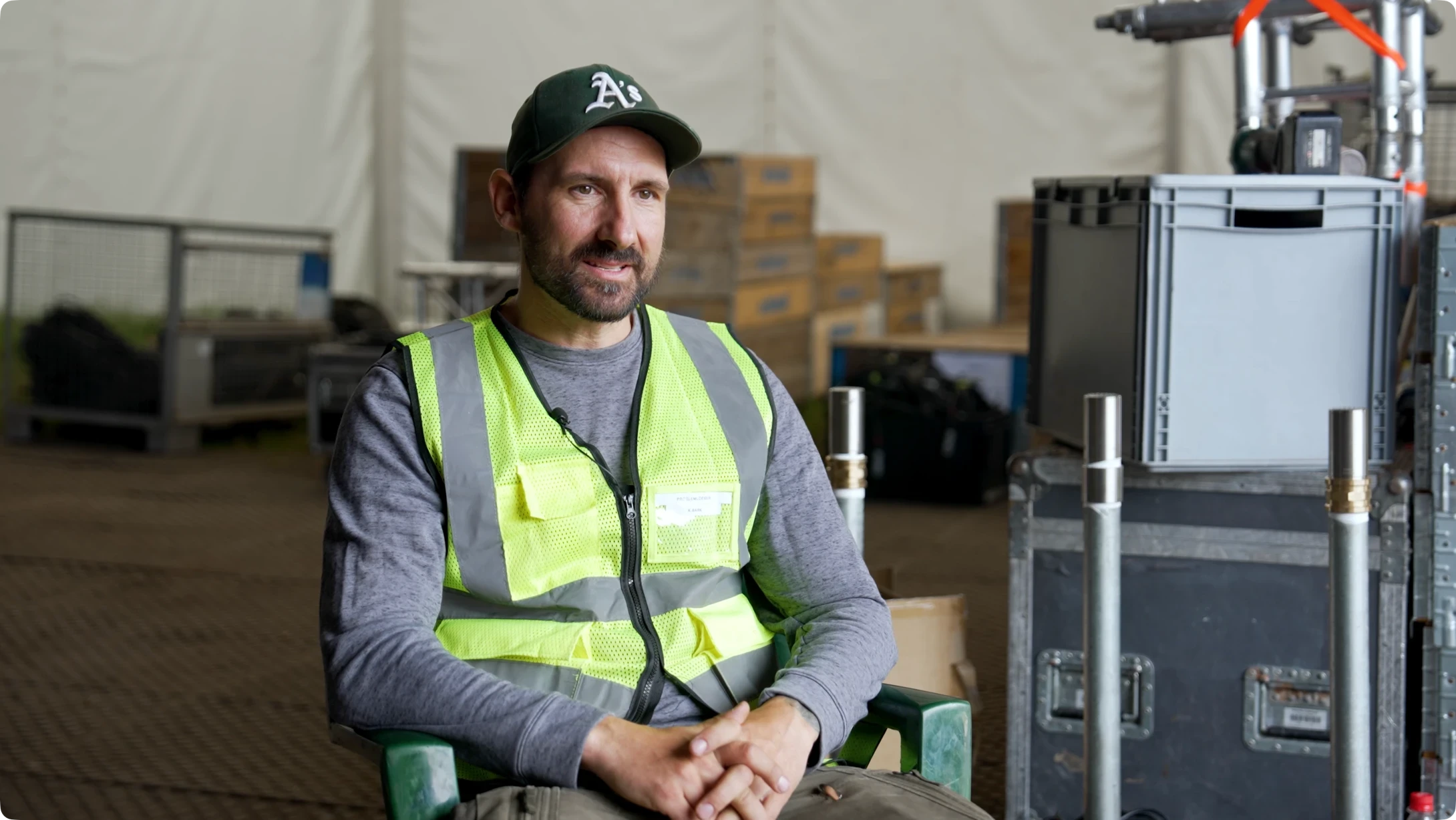
Most testimonial videos are forgettable talking heads. Here is the six-part structure we use to script one that earns trust, plus a prompt you can copy to draft your own.
Key insights
The opening chapter is not a formality. It decides whether the right viewer keeps watching.
Viewers need to recognize the problem before they will listen to a solution.
Showing how something was implemented is what makes the result believable.
One honest number beats a paragraph of praise.
One call to action at the end. Two asks and you get neither.
In this post:
Section
Most testimonial videos are forgettable. Someone in a meeting room says the software is really great, a logo fades in, and the viewer clicks away without a single reason to care.
The good ones follow an order that matches how a buyer makes up their mind. First I need to see myself in this company. Then I need to recognize the problem. Only then am I ready to hear about a solution. Here is the six-part structure we use when we script one.
Before you film: understand your audience
Before a camera turns on, you need to know who is watching and what they need to hear. Skip this and you get a video that sounds fine and moves nobody. Answer these five questions first:
What result does your audience actually want?
What are they thinking about, and what exact thoughts run through their heads?
What do they secretly want most?
What words do they use? Do they speak their own language?
What challenges is your audience facing right now?
1. Introduce the company
The video opens with the customer introducing themselves and their company. This looks like a formality. It is the part that decides whether the right viewer keeps watching, because they are scanning for one thing: is this company like mine? Size, industry, the way they work. A facility manager at a 400-person company will not sit through a story from a two-person startup.
This is also where your B-roll starts working. Show the company at its best: the team in action, the building, the shop floor. The viewer should think "that is us" before anyone mentions a product.
Example opening line to adapt: "My name is [NAME] and I am [ROLE] at [COMPANY]. We [WHAT THE COMPANY DOES]."
Work this out before you script anything:
Who is speaking, and what is their role?
What does the company do, in one sentence a stranger would understand?
Which details signal "this company is like mine" to your target viewer? Size, industry, region, setup.
What should the viewer see in the first shot?
2. Name the problem
Now the problem, in the customer's own words. If someone hears their own situation described back to them in the first thirty seconds, they stay. If they hear your marketing vocabulary instead, they leave.
Example line to adapt: "Our problem was that [PROBLEM]."
Get clear on:
What single problem will your audience recognize instantly?
How would the customer describe it in their own words, without your product terms?
What did it cost them? Time, money, errors, nerves.
What had they already tried that did not work?
Pro tip: Resist the urge to open with credentials or company history. The viewer does not care yet. Let them recognize the problem first.
3. Present the solution
Keep this chapter short. The viewer does not need a feature tour. They need to know what the customer picked and what convinced them to try it.
This is also the moment to deal with skepticism. Whatever doubt your viewer has is the same doubt your customer had before they signed. Naming it out loud on camera is worth more than any claim you could make yourself.
Example line to adapt: "That is when we found [SOLUTION]."
Ask your customer:
What did you choose, in one sentence?
What convinced you to try it?
What doubts did you have before you said yes?
What almost stopped you?
4. Show how it was implemented
Most videos jump straight from the problem to the happy ending. That gap is exactly where viewers stop believing. Show the way instead: how it was rolled out, who was involved, how long it took, what the first weeks looked like.
This chapter is where B-roll earns its place a second time. Screens, devices, people actually using the thing. Someone watching should be able to picture the same rollout in their own company.
Cover this:
How was it introduced, in broad strokes?
Who was involved, and how did the team react?
How long did it take before it ran properly?
What does the process look like on camera?
5. Share the results
Now the payoff. Vague praise ("it really helped us") converts far worse than one honest, specific number. Coach your customer beforehand to bring real figures, even approximate ones. "Onboarding used to take two weeks, now it takes two days" does more work than any adjective.
Example line to adapt: "Since then, we [RESULT]."
Dig for:
What changed that the customer can put a number on?
What does a normal working day look like now compared to before?
Which result matters most to the viewer, not to you?
What would they lose if they went back?
6. Close with a recommendation
The last thirty seconds. The customer says out loud whether they would recommend it and to whom, then you make one clear offer. One. Two asks split attention and you get neither.
A genuine closing line lands better than any polished tagline. Something like "Thanks [COMPANY], it was the best thing that could have happened to us." Follow it with a single, low-friction step: a free intro call, a short demo, a no-commitment consultation.
Decide upfront:
Would the customer recommend it, and to whom exactly?
What is the single next step you want the viewer to take?
How do you make that step easy to say yes to? Free, short, personal.
What stays on screen at the end?
Chapter | Goal | What the viewer should think |
|---|---|---|
1. Introduce the company | Identification | "That company is like mine." |
2. Name the problem | Recognition | "That is exactly my situation." |
3. Present the solution | Orientation | "So that is what they picked." |
4. Show the implementation | Credibility | "That looks doable for us." |
5. Share the results | Proof | "We could get that too." |
6. Close with a recommendation | Action | "This is worth a quick call." |
Want us to make it for you?
We produce these videos end to end: script, shoot, edit, delivery. If you want one that follows this structure without running the production yourself, take a look at our video production service. For a real example, watch the testimonial video we produced for Timly, where their enterprise customer BELFOR shows how the software is used in daily operations.
Copy this prompt to script your own
Paste this into your AI tool of choice, fill in the brackets, and you get a first draft you can take into a shoot.
Author

Alexander Winter
Founder & Writer
Alexander is the founder of HIVER, writing about design, branding and building products that people love to use. He is deeply rooted in SaaS, tech marketing and branding, and brings strong expertise in video production and storytelling.